Welcome to our weekly edition of what’s hot in social media news. To help you stay up to date with social media, here are some of the news items that caught our attention. What’s New This Week Pinterest Rolls Out Buyable Pins: “You’ll start seeing Buyable Pins all over Pinterest: in the home feed, on boards […]
Do you create YouTube videos? Want to increase your audience? To learn how to create an online community using YouTube, I interview Tim Schmoyer. More About This Show The Social Media Marketing podcast is an on-demand talk radio show from Social Media Examiner. It’s designed to help busy marketers and business owners discover what works with […]
Passionate brand advocates can provide marketing on steroids.
On a social web they boost sharing, enable crowd sourced marketing and they do it for free.
They are your online tribe of brand ambassadors….
Brand ambassadors are people, customer advocates and fans who represent and talk about your brand with passion. If they are also passionate about your brand then that can provide powerful crowd sourced marketing that can amplify brand awareness.
Because they love your products and services…
You should make sure that they have conversations in front of as many potential customers as possible.
Bigger can be better.
Those conversations can be offline and online. The social web has made the online role more powerful and sometimes even viral.
When you need an authentic promotional boost, you need to recognize and leverage your brand ambassadors. This can be done with visual content marketing that includes incentives, tools and technology that can multiply your brand awareness.
People like to buy from people
In the past, businesses have enlisted logos, symbols, key colours and slogans to build their brand awareness. However, with the instant gratification demands of Gen Y and the “always on” expectations of Gen Z, there is so much more to successful brand marketing than a catchy jingle.
User-generated content, which predominantly includes photos, videos and tweets, is the most powerful tool you can use to harness and maximize the influence of your brand ambassadors. By leveraging the wealth of visual content your brand ambassadors are generating, you can transform a simple hashtag into a digital “call to arms”.
Traditional brand ambassadors
Until recently, brand ambassadors have largely been celebrities who were paid to endorse a brand. The formula is simple- get someone with a public profile to wear, be photographed with or mention your product, and a spike in sales should follow.
Celebrities like Kate Middleton and Emma Watson can send retail sites into overdrive as the masses scout for certain covetable items. The Dutchess’ $50 (USD) black-and-white spotted maternity dress sold out on ASOS’s site only minutes after she was published wearing it.
Emma Watson increased the scarf sales of Crumpet, a British knitwear company, by 62 percent in just three weeks after being snapped wearing one of their designs.
But what about if you are a smaller business, who cannot afford to shell out for royalty, or even C-grade celeb?
Without blowing the whole year’s marketing budget on a five minute celebrity endorsement, you can transform your consumers into powerful and relatable brand ambassadors through the influence of visual content.
Fans love talking about brands they love
Becoming a brand ambassador is often an accidental outcome for many consumers in today’s digital era, whose natural instinct it is to collect, curate and share their experiences. It is up to you to decide how to market your business with your brand ambassadors’ visual content.
Brand ambassadors espouse the brand value you guarantee to deliver to your customers. Your job is to then help them find others like them, offering them a platform where their needs are placed front and centre. With today’s consumers more inclined than ever to collaborate, you cannot afford to not have their voice designed into every phase of your business’ functions.
Let them sell your products
Do you remember Avon?
The direct-selling cosmetic brand Avon operates almost entirely on the basis of brand ambassadors. To buy their products or even gain access to them, you need to know a brand representative.
While many companies are unlikely to adopt this exact business model, we can learn a great deal from this style of marketing.This type of marketing is incredibly effective because the sales message does not come from a corporation, it comes from family, friends or co-workers; people we trust.
According to a recent Nielsen survey, 84 percent of those surveyed ‘always’ or ‘sometimes’ take action based on personal recommendations. Further still, 70 percent said they took action because they followed someone’s recommendation online.
A candid endorsement from people who do not directly represent or work for your brand is truly valuable among your potential consumers and future fans. A genuine recommendation from a friend instills not only confidence is your brand but confidence in the consumer’s decision to pick your brand over one of your competitors.
In today’s noisy and overcrowded marketplace, you need to be nimble and responsive to consumers’ needs. You need to motivate your consumers to design not only your product but your brand’s message with you.
Rather than seeing your advertising strategy as a one-way street, create an environment where your consumers want to talk to you, and even better still, want to talk to others about you. What better way to get the conversation started than by leveraging your brand ambassador’s visual content. Remember, a picture speaks a thousand words.
Excite your ambassadors
According to VisionCritical, 43 percent of social media users have purchased a product after ‘Sharing’ or ‘Favoriting’ it on Facebook, Twitter, or Pinterest.
Whether it is the trend-setters or trend-buckers who characterize your target market, visual content is a hard to ignore medium through which your advocates are already spreading your brand’s message.
In order to excite your potential brand ambassadors, you need to create a campaign which will drive their desire to share with friends, followers and onlookers.
Campaigns can start with simply ‘Liking’ or ‘Following’, usually in exchange for new product updates and competition announcements. You can then prompt your consumers to share photos, statuses and videos associated with a your brand’s keywords or hashtags through a ‘call to action’, prize incentives or instant rewards. Further still, have your customers upload a photo of them redeeming their prize or enjoying their discount across their social networks while tagging your company or using your official hashtag.
With user-generated visual content becoming more authentic and more trusted than any corporate content, it is time to place your brand in the background and your consumers’ real-time experiences in the foreground.
3 practical tips on how to market with visual content
1. Offer Discounts and Prizes
MarketForce reports that 79 per cent of people say their primary reason for ‘Liking’ a company’s Facebook page is to receive discounts, with a further 81 percent saying they are influenced by what their friends share on social media.
By routinely offering discounts and promotions on your social media channels in exchange for ‘Liking’, ‘Sharing’ or uploading, your brand will grow its reach ten-fold via a series of mouse clicks.
Make it easy for your consumers to share their involvement with others – both online and offline. Promote relevant hashtags and reach out to thank those that participate in the contest will transform your consumers’ entries into unique, memorable brand engagements.
Gatorade’s ‘G Challenges’
The ‘G Challenges’ campaign run by Gatorade generated impressive results. With an AFL grand final weekend for four up for grabs, the campaign gained significant traction within the first few hours of launching. Gatorade asked their customers to film, tag and share a series of AFL footy challenges over the course of six weeks. Entries came in thick and fast.
A selection of these entries were then republished by Gatorade across their social media channels and rewarded with weekly prize packs, sparking positive consumer conversations across Facebook and Instagram. By employing a simple marketing strategy, Gatorade were able to transform the AFL amateur on the local playing field into an online brand ambassador via one simple upload.
2. Reward Them With Recognition
Developing a close relationship with your brand ambassadors is a vital ingredient to a winning marketing strategy. Today’s consumers crave self-validation and it is your job to leverage this need.
Identifying key influencers and “shoulder tapping” them with recognition will inspire others to follow suit. If they ‘Share’ a photo, thank them for it. If they leave a comment, reply to it. Develop a fun and reciprocal relationship between your brand and your consumers.
If you validate their efforts, you’ll encourage consistent invaluable user-generated content which can then be republished and repurposed to grow your reach and increase your engagement.
Superette’s #Superstyle
The #superstyle campaign run by New Zealand fashion retailer Superette is a great example of identifying, recognizing and leveraging keen brand ambassadors. Superette’s followers used the hashtag #Superstyle on Instagram to see their photo added to an online gallery and social community on the company’s website.
The beauty of this campaign is in the simplicity and impact of user-generated content. Superette runs the social hubas an ‘always on’ activity, constantly collecting up-to-date and visually stunning content. They launched the social hub with a contest, with the winners announced on Superette’s blog.
Recognizing and rewarding your contestants’ active participation is a key step to maximizing reach. Help them to help you. Upgrade your consumers into brand ambassadors with incentives, such as being showcased on your site’s social hub, and they will spread the gospel of your brand in real time, to real people, to give you real reach.
3. Provide a Platform to Connect
With the organic reach of Facebook decreasing, it is imperative for businesses today to find alternative ways to engage with their consumers.
Providing an attractive and user-friendly platform, which looks and feels like part of your website, is a no-brainer. Forget static images and staged brand advertising, with the right tools you can build your own media channel using user-generated content. In turn, you’ll attract more visitors to your website, have them stay longer, increase your conversion rate and grow your email database.
Again, it is a no-brainer. JUCY World
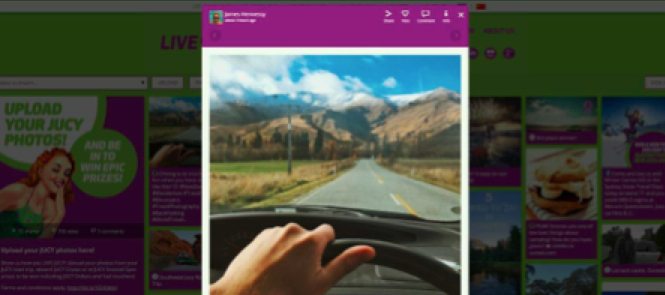
One business that is choosing to bring their content home is Jucy Rentals. A car hire and rental specialist with locations across the United States, Australia and New Zealand. Jucy have chosen to own the relationship they have with their customers.
Collecting content from promotional hashtags and direct upload, Jucy’s dedicated social hub has become a place for globetrotters and intrepid travellers alike to share their inspirations and be inspired. Priceless images of Jucy campervans parked up next to world landmarks and against breathtaking vistas are uploaded every single day to the platform.
By repurposing this content across their official channels and e-commerce pages, Jucy have developed a fantastic strategy for encouraging brand ambassadorship by placing themselves at the centre of their customers’ conversations.
The media landscape has changed and there is a huge opportunity to grasp. With the right tools and technology, you can empower your consumers to not just speak about but become the voiceof your brand.
Are you looking for more ways to use LinkedIn for your business? Have you considered showcase pages? LinkedIn showcase pages enable you to promote certain products or services to specific customer segments. In this article you’ll discover how to use LinkedIn showcase pages for your business. What Are Showcase Pages? Showcase pages are an extension […]
It’s an issue every entrepreneur faces at one point or another.
Here’s the problem. You’re trying desperately to figure out how to relate to your audience in a way that gets them to choose your company over your competition. You read tons of articles and books on branding but there’s something missing.
Because of this, your efforts at selling fall flat. You know you have a great idea and great products, but you can’t seem to get your business to connect with your desired audience.
Why?
Because being effective at selling is nearly impossible without a remarkable brand. Yes, your offerings might be insanely awesome, but if you can’t communicate the true value of your brand, you won’t succeed.
One day, you figure it out. You realize that in order to make your brand more attractive, you need to have a purpose. Something that your company strives for beyond selling more products or services.
You need something that will make your brand remarkable.
If you want to be remarkable, you have to show your audience that your company is more than just a profit-seeking machine. It requires soul searching and a concerted effort to figure out what your brand’s values are.
Fortunately, there is a solution. I spoke with branding guru Mark Di Somma about the importance of building a brand with a purpose. He gave 5 questions that every entrepreneur must ask themselves in order to discover what their brand’s purpose is.
Who Is Mark Di Somma?
Mark Di Somma is a senior brand strategist at The Blake Project, which is a brand consultancy that helps organizations build remarkable brands that stand out from their competition. His background includes advertising, direct marketing, and brand strategy.
Di Somma has over 20 years of experience helping organizations formulate creative solutions for their brands. He also contributes regularly to the Branding Strategy Insider blog.
What Is Brand Purpose?
A great example of brand purpose is Dove. Dove is a company that manufactures soap products. It is now one of the top soap brands in the world.
However, Dove isn’t just about selling soap. Sure, that’s how they make their money, but their purpose is much higher than that. Dove’s mission is to increase the self-esteem of women. They desire to redefine the definition of beauty so that women of all ages can feel better about themselves.
Their “Campaign For Beauty” was created in order to combat self-esteem issues in women that result from a poor self image. Through this campaign, Dove seeks to change the lives of women all over the world.
The reason Dove has been so successful is because they have a distinct purpose that resonates with its audience. See the difference? As an entrepreneur, this is what you will need to do with your company if you want connect with your audience.
When asked why an entrepreneur should focus on the purpose of their brand, he said:
“Purpose lifts an entrepreneur out of just thinking about themselves and their ideas. It gives them a wider context which inspires more lateral thinking. It motivates others to join in the pursuit of that purpose.”
It’s clear that there are several important ways that a purposeful brand can greatly benefit your entrepreneurial efforts. It gives yourself and your employees something to believe in. More importantly, it gives your customers something to believe in. In your company, they now have a cause that they can support.
Why Is Purpose Critical For Branding?
Usually, when one thinks of a company’s brand, they focus on the products or services that the company offers. It’s easy to make the mistake of associating a company’s brand with its unique selling proposition.
However, in this day and age, brands need something more in order to stand out. Why? Because there will always be companies that claim they can do it better, faster, and cheaper. It’s not enough to tell the same old hackneyed stories about why your product or service is better than the competition.
Your brand needs (and deserves) something more. It needs a purpose.
Purpose is the “why” behind your brand. It’s the real reason your company exists. A brand purpose defines the “soul” of the organization. It’s what a particular organization stands for. If you want to stand out, your brand has to stand for something beyond its products and services.
The 5 Questions
Finding your brand’s purpose isn’t easy. As I stated before, it requires a little bit a soul searching and reflection. You must discover what your true values are.
When discussing the ways in which a business owner can discover their brand’s purpose, Di Somma suggested that you ask yourself these questions:
When you started your business, what did you see that you wanted to change?
How can the pursuit of that change make a bigger difference?
What change do others want to see in the world? How does your brand fit in?
How can you articulate a purpose that will inspire your audience to trust and support your brand?
How will your purpose motivate those that you work with?
Let’s take a look.
What Change Do You Want To See?
What is the problem that you want your business to solve? How is your business uniquely equipped to combat this issue?
For Dove, the problem is low self-esteem in women. Since they’re a company that manufactures skin care, hair care, and other beauty products, it makes sense that they would work to make women feel better about the way they look.
How Can Your Company Make A Difference?
When you know what problem you’d like to solve, you have to figure out what your company is going to do about it. How do you plan to make things better? After all, it doesn’t make sense to complain about a problem if you don’t intend to do anything about it, right?
Look at Cheerios. Their purpose? They want kids to read more. That’s it. How do they make a difference? By partnering with the “Little Free Library Project“. This organization places small boxes full of books in certain areas. People are encouraged to take a book out of the box and donate old books by placing them in the box.
This is just one of the ways that Cheerios shows their commitment to getting children to read more. On their site, they have plenty of content and material that supports this cause.
What Change Do People Want To See?
Having a successful brand purpose means being able to understand what changes your audience wants to see. What issues does your audience see as important in the world? By figuring this out, you will be able to adopt a purpose that people already believe in.
That’s what Green Giant is doing. Green Giant has chosen to use their brand to fight bullying. Through their “Nominate A Giant” initiative, they encouraged over 12,000 people to contribute stories that highlighted people who stood up to bullying in October of last year.
Everyone knows that bullying has become a major issue in our country. By focusing on what people are concerned about, Green Giant has been able to make a difference.
How To Communicate Your Brand’s Purpose?
After you figure out what your brand’s purpose is, you need to figure out an effective way to communicate this purpose. This requires an effective marketing strategy. One way to do this is to follow Panera Bread’s example of using content to explain what you stand for, and why.
On its website, Panera Bread has a whole section dedicated to discussing what food should be. They promote the consumption of healthy foods in order to help their customers eat better.
How Your Purpose Motivates Your Team
While it’s very important to have a purpose that attracts an audience, you also need to consider those you will be working with. Part of having a purposeful brand is having employees that buy into the vision as much as you do. By having employees that truly buy into your brand’s ultimate purpose, you will have evangelists that delight in sharing your brand’s values with others.
That’s what Zappos does. Tony Hsieh, founder and CEO of Zappos, sees happiness as the company’s ultimate purpose. As a student of happiness, he has built a culture that has happiness as its foundation.
Because of this, his employees are willing to go to the extreme to make their customers as happy as possible. In one case, a Zappos call center representative broke records by speaking with a customer for over 10 hours!
Hsieh’s obsession with happiness has helped his organization do more for its customers than just sell them products. He has been able to create a culture designed to make customers happier from having interacted with them.
Conclusion
Entrepreneurship isn’t easy. Anyone who has started a business knows how challenging it can be. Part of being a successful entrepreneur means having a purpose that guides you.
Like people, companies need purpose. It’s critical. A brand purpose is an important part of determining your company’s identity. It’s one of the most crucial components in creating a self-actualized brand.
Also brand purpose is more than just something that attracts an audience. It’s more than something that will motivate your employees.
It’s what will guide and motivate you.
A purpose keeps you grounded and focused on what’s really important. It helps you make the right decisions for your company. Di Somma said this:
“It sets clear parameters for what the business can do and not do if that purpose is to be achieved.”
If you want to be a wildly successful entrepreneur, you need to stand for something. That’s what a brand purpose is all about. Do yourself a favor, and discover your brand’s purpose.
For some of us it helps grow our business. For others it offers that warm and fuzzy feeling when we open up our Google analytics dashboard.
The harsh reality is that producing content and getting it noticed is not the easiest job – and you’re not the only one in the race for more website visitors.
Every day more and more content is produced, and people have to make a choice.
Your readers make a choice about what to read, and what to forget about.
This means we need new and unique ways of attracting people to our blog and keeping them around.
Here’s where your traffic is coming from;
Now let’s look at 4 things you could be doing to get more traffic from these sources. Plus 12 free tools (because who doesn’t love free things?) that will help you get there.
Make your content shareable
Social media is a primary driver of engagement, traffic and exposure for your blog.
Whether it’s used as a medium for engaging a new audience, or to allow your followers to share your hard work, you can increase traffic with a few social media tricks.
If you are looking for a different platform to get your content shared, you should consider Scoop.it.
Just like other social media platforms, the aim is to share interesting content to a community, which can then be shared with one click to other networks.
Be organized with project management
To run a a successful blog you need to be organized.
If your team is small, you need to make sure you are covering your targets within a certain period. And if your team is large, you need to make sure everyone is working in sync and not duplicating each other’s work.
Your organization’s style is picked up by your audience and when it’s done well you build trust in your industry.
It might take time to set up in the beginning but it will increase your traffic in the long run.
Getting feedback from users is getting much harder.
Having a feedback widget can help in getting important data that will help develop your site.
There are many paid versions, but this tool is a free option for those wanting to try out this strategy.
These are just a snapshot of the tools you can use to drive more traffic to your site.
Digital tools are always changing, so don’t try and use them all. Find the ones that fit for your site and learn how to use them in the best way possible.
Did I miss something? What free tools do you use to get more blog traffic?
Guest Author: Shirley Pattison is the content marketing editor at imonomy, an in-image advertising company for online publishers. Shirley loves everything about content and blogs both at work and in her free time. If she’s not writing, you’ll find her at the beach with a good book. Connect with the team @imonomy or say hi to Shirley @ShiProjects
Do you use LinkedIn Publisher? Want to get deeper engagement from your posts? LinkedIn Publisher now offers the ability to review stats for your published posts, which helps you refine messaging, target the right audience and directly engage with the people who interact with you. In this article I’ll share how to access LinkedIn Publisher statistics […]